
Published 14 Jul 2026 · 4 min read
7 warning signs of a dying car battery (and what to do next)
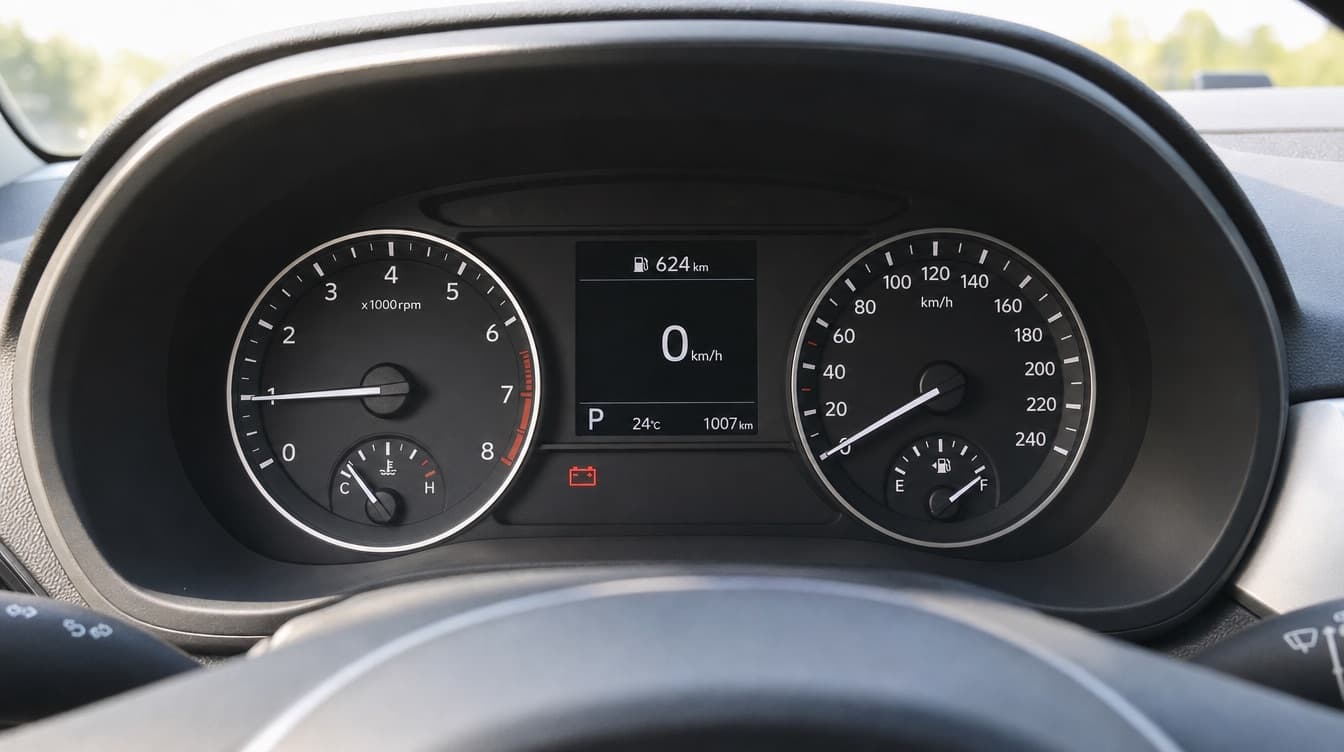
A flat battery rarely comes out of nowhere. Batteries are the single most common cause of breakdown callouts: the RAC, the UK's roadside assistance service, attended more than 445,000 battery-related jobs in a single year. The good news is that most batteries give clear warnings well before they finally give up. Here are the seven signs worth knowing.
1. The engine cranks slowly
The clearest early warning. If you turn the key or press the starter and the engine turns over more slowly or unevenly than usual, the battery is struggling to deliver enough current to the starter motor. Morning starts show it first. Have the battery tested before it strands you.
2. A click (or rapid clicking) instead of a start
A single click or a burst of rapid clicking when you turn the key means the battery is too weak to turn the starter at all. At this stage you will usually need a jump start to get moving, and the battery should be tested immediately afterwards.
3. Dim or flickering headlights
Headlights that look noticeably dimmer at idle and brighten when you rev the engine point to a battery that can no longer hold voltage. Watch the cabin lights for the same behavior.
4. Sluggish electrics
Slow power windows, a weak horn, or an infotainment screen that stutters on startup are all low-voltage symptoms. Modern cars carry a lot of electronics, and a fading battery shows up there first.
5. The battery warning light
If the battery-shaped light on the dashboard stays on while you drive, the charging system is not keeping the battery topped up. The fault may be the battery itself or the alternator. Either way, have it checked promptly rather than waiting for a no-start.
6. A swollen case or a rotten-egg smell
Heat and overcharging can make the battery case bulge, and a leaking battery gives off a sharp sulfur smell. Both mean the battery is physically damaged. Never jump start a battery in this condition; it needs replacing.
7. Frequent jump starts, or a battery past two years old
If you have needed more than one jump start in a month, the battery is telling you it is finished. Age matters too: in Thailand's heat most car batteries last around two years, noticeably less than the three to five years quoted in cooler countries. Once a battery passes the two-year mark, take every warning sign seriously.
What to do when the signs appear
If the car still starts, get the battery tested soon: a healthy battery rests at about 12.6 volts, and anything below roughly 12.4 volts deserves a professional check. If the car will not start, a jump start can get you moving: connect red to the flat battery's positive terminal, red to the donor battery's positive, black to the donor's negative, and clamp the last black lead to bare metal on the stalled car, then disconnect in reverse order. Never jump start a battery that is cracked, leaking, or swollen, and never use a hybrid or electric car as the donor vehicle.
The "just drive it around" myth
A common belief is that half an hour of driving recharges a flat battery. In reality the alternator is designed to maintain a charged battery, not to revive a dead one. A 30-minute drive after a jump start puts back just enough charge to get you home; a genuinely flat battery needs many hours on a proper charger to recover, and an aging battery often never fully does. If the same battery keeps going flat, replacement is cheaper than being stranded.
Battery or alternator?
One useful check: if the car starts after a jump but dies again soon, or the lights grow dimmer as you drive, suspect the alternator and charging system rather than the battery alone. Testing the battery and the charging system together settles it.
If your car in Nakhon Ratchasima is showing any of these signs, there is no need to risk the drive to a shop. Send us your car's details, and we will confirm the right FB battery and the total price before you decide, then come to you, test it, and fit the new one on the spot.