
Published 11 Jul 2026 · 5 min read
Cheap car batteries in Thailand: how to pay less without getting burned
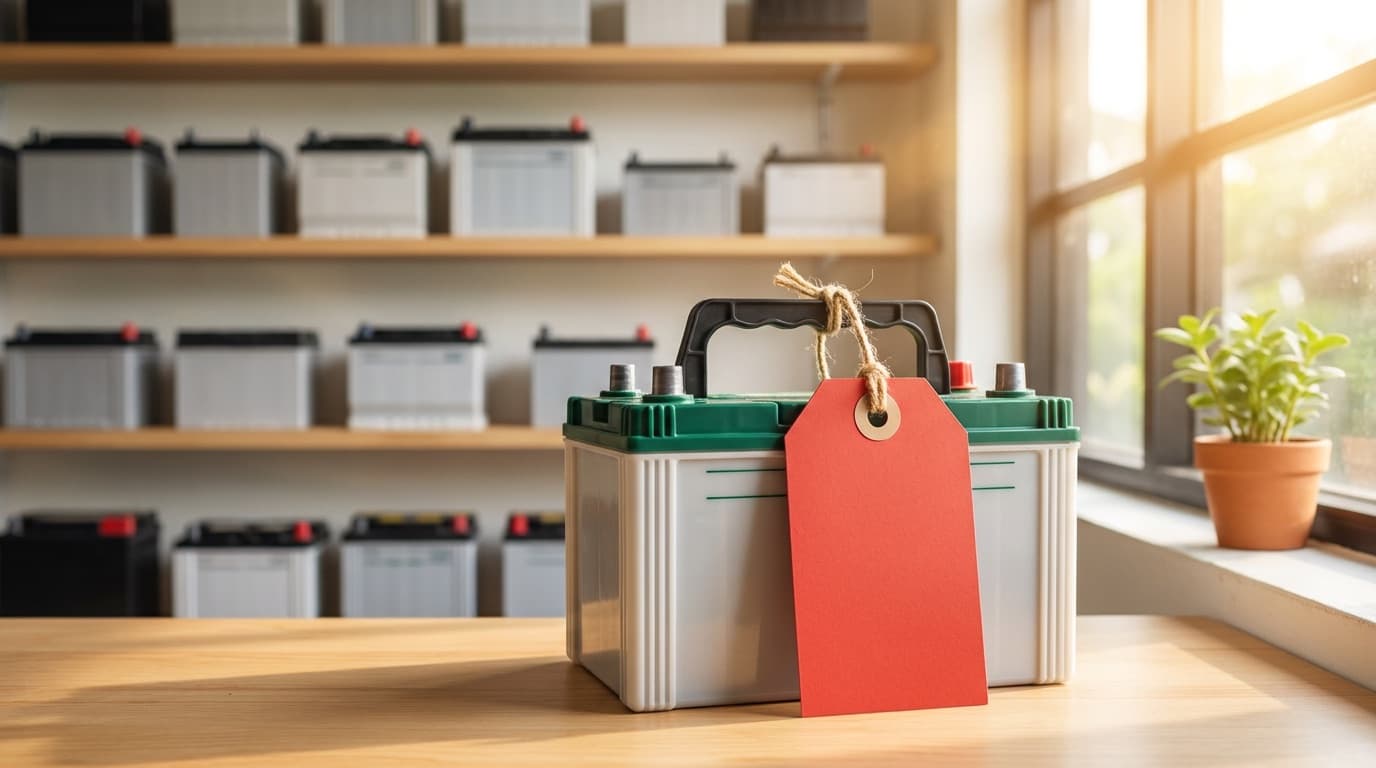
Type cheap car battery into a search box and you will find prices a thousand baht apart for the same car. The truth is that the battery with the lowest sticker is rarely the one you pay least for, once delivery, installation, and the service life you actually get are counted. This post explains what sets a battery's price, where you can genuinely save, and which kinds of cheap turn out expensive.
What actually sets a battery's price
Two similar-looking batteries can differ in price for three main reasons. First, size: the higher the amp rating and cold-cranking amps, the more lead sits inside, and the price moves with the metal. Second, technology: from conventional wet batteries through sealed maintenance-free to EFB and AGM for start-stop cars, which endure roughly twice the charge cycling of a standard battery and cost the most. Third, brand tier and warranty length: the one-year warranty that comes standard on a new battery in Thailand is part of what you are paying for, not a free extra.
Ways to pay less that actually work
- Buy to your car's spec, not above it: CCA far beyond what the car calls for does not extend battery life in a hot climate
- Always trade in the old battery: most quoted prices in Thailand already include the trade-in discount, and buying without one costs several hundred baht more
- Compare the all-in price, not the shelf tag: add travel or installation charges before judging; our shop delivers and installs free within 4 km of the shop in Nakhon Ratchasima
- Ask for the freshest production lot: ideally under 3 months old and no more than 6, because a battery ages even sitting unused
- If your car has start-stop, do not economize with a standard battery: it will wear out unusually fast and cost you a second purchase sooner
The cheap that is not really cheap
Two kinds of cheap deserve suspicion. The first is the repainted battery, known in Thai as yom maew: an old unit with a polished case and fresh acid sold as new, which works briefly and then fails because the plates inside were already worn. The second is shelf-aged stock: genuinely new batteries that sat unsold, self-discharging around 1–5% a month, faster in heat, their plates quietly degrading before ever meeting a car. The defense against both is the same: read the manufacture date code on the casing before paying, and buy from a shop that puts its warranty in writing with clear terms.
The other option: a tested used battery
If the goal is the lowest short-term outlay, a properly tested used battery is a reasonable answer. Our shop rotates them in when stock arrives, at around 40% below the equivalent new unit, and every one is measured and graded before it is sold. The full checklist is in our second-hand battery guide.
Battery prices move with the market and vary by car, so the most accurate number is always a phone call away. Tell us your car's model and the team will give you the full picture before you decide: the all-in new-battery price with your trade-in discount counted, and the tested used options if any are in stock, then come and fit it anywhere in Nakhon Ratchasima (4 km radius).