
Published 8 Jul 2026 · 6 min read
Are second-hand car batteries worth it? Real savings, risks, and a pre-purchase checklist
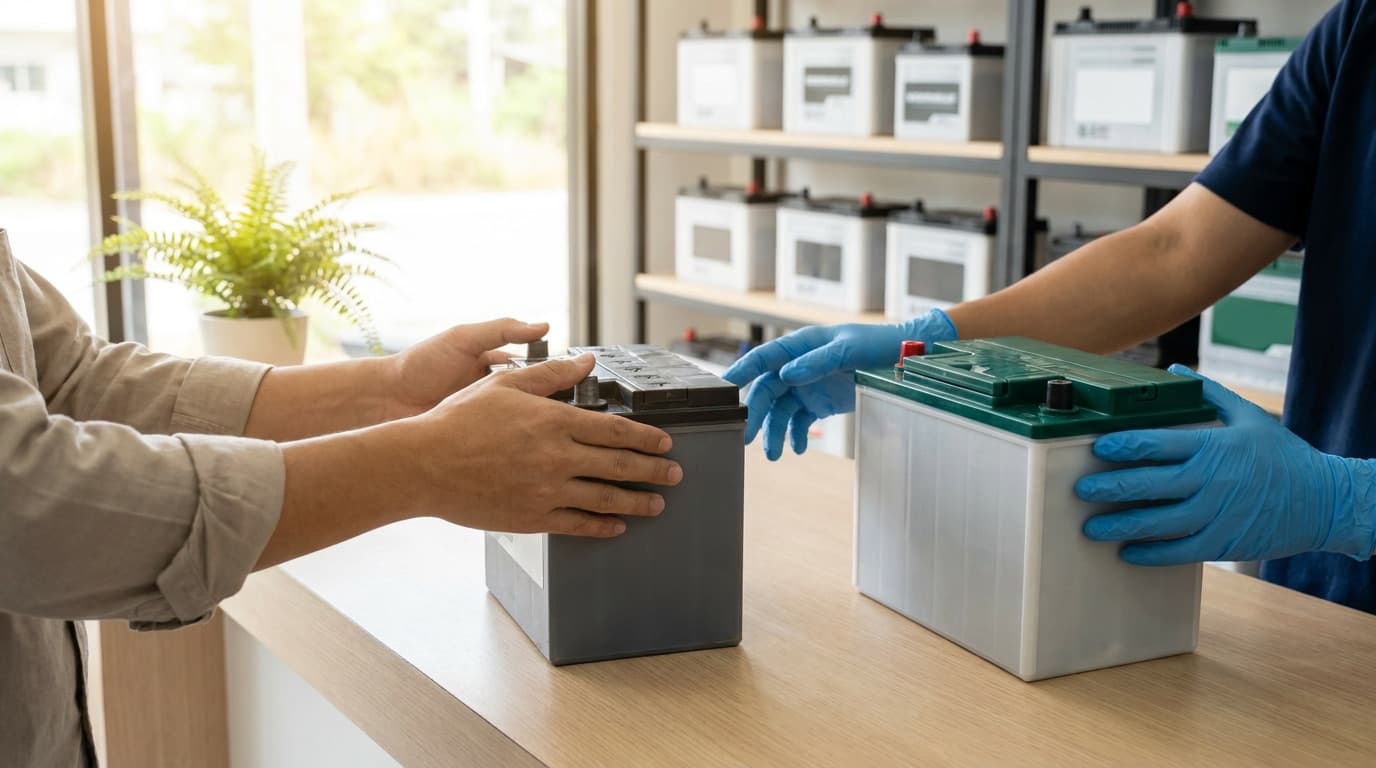
Almost every week someone walks into the shop with their mum or dad and asks the same question: do you have a second-hand battery? The honest answer from behind our counter is that some used batteries are genuinely good value, and some are money spent buying a problem. What separates the two is not luck, it is testing before paying. This post covers why used batteries are cheap, where the risk hides, and exactly what to check.
Why used batteries are cheaper, and by how much
Most used batteries on the market come from trade-ins when customers buy new, or from cars taken off the road. That is why they can cost far less: at our shop, when stock is available, a used battery runs around 40% below the equivalent new one, priced to each unit's condition. The trade-off to understand is that part of the battery's life is already spent. In a hot country like Thailand a battery averages around two years, so a unit that has worked for a year does not have long left for you, however clean it looks outside.
The risk you cannot see from the outside
The problem with a used battery is that wear hides inside. Worn plates are invisible through the casing. Some batteries read a healthy 12.6 volts at rest yet collapse the moment they feed a real load, and a battery that once sat flat for weeks builds permanent sulfate deposits on its plates, capacity that never comes back. On top of that, used batteries in the Thai market usually carry a very short warranty, around one month, against a full year on a new one. If a seller offers no warranty at all, every risk sits with the buyer.
The pre-purchase checklist, valid at any shop
- Measure resting voltage with the engine off: a healthy unit reads 12.6–12.8 volts; below 12.4 means it is undercharged, and below 12.0 signals serious degradation
- Never trust voltage alone: ask for a load test or CCA reading against the figure printed on the battery; voltage under load should not drop below roughly 9.6 volts
- Check the manufacture date code on the casing; the fresher the production, the more life remains, and any honest shop will point the code out for you
- Inspect the outside: a swollen or cracked case, heavily corroded terminals, damp residue, or a sharp sulfur smell each mean walk away
- Ask exactly what warranty applies: used batteries in Thailand typically carry about one month, and none at all should make you think hard
When a used battery is the smart buy
A used battery suits short-horizon situations: a car you are about to sell, one that rarely leaves the driveway, or a month where the budget is genuinely tight. Paying around 40% less for a tested unit gets you a battery with real service left. But if you plan to keep driving the car for years, a new battery with its full one-year warranty and a trade-in discount on your old unit usually wins once you count cost per month of life actually delivered.
The standard we grade every used battery against
At SP Autoparts, used batteries rotate through the shop in batches, and every unit must pass a resting-voltage check, a load test, and a remaining-life assessment before it goes on the shelf. Units close to the end of their life are culled, never sold on, and each battery is priced to its actual tested condition. If you would rather go new, we also take your old battery as a trade-in to bring the price down.
Our used stock changes constantly with what comes in, and prices follow each unit's condition. Call us to check what is available today, or send your car's details through the form: the team will lay out the used options on hand and the new-battery price side by side before you decide, then come and fit it anywhere in Nakhon Ratchasima (4 km radius).