
Published 23 Jul 2026 · 4 min read
Car won't start but the lights still work: battery or alternator? A 5-minute check
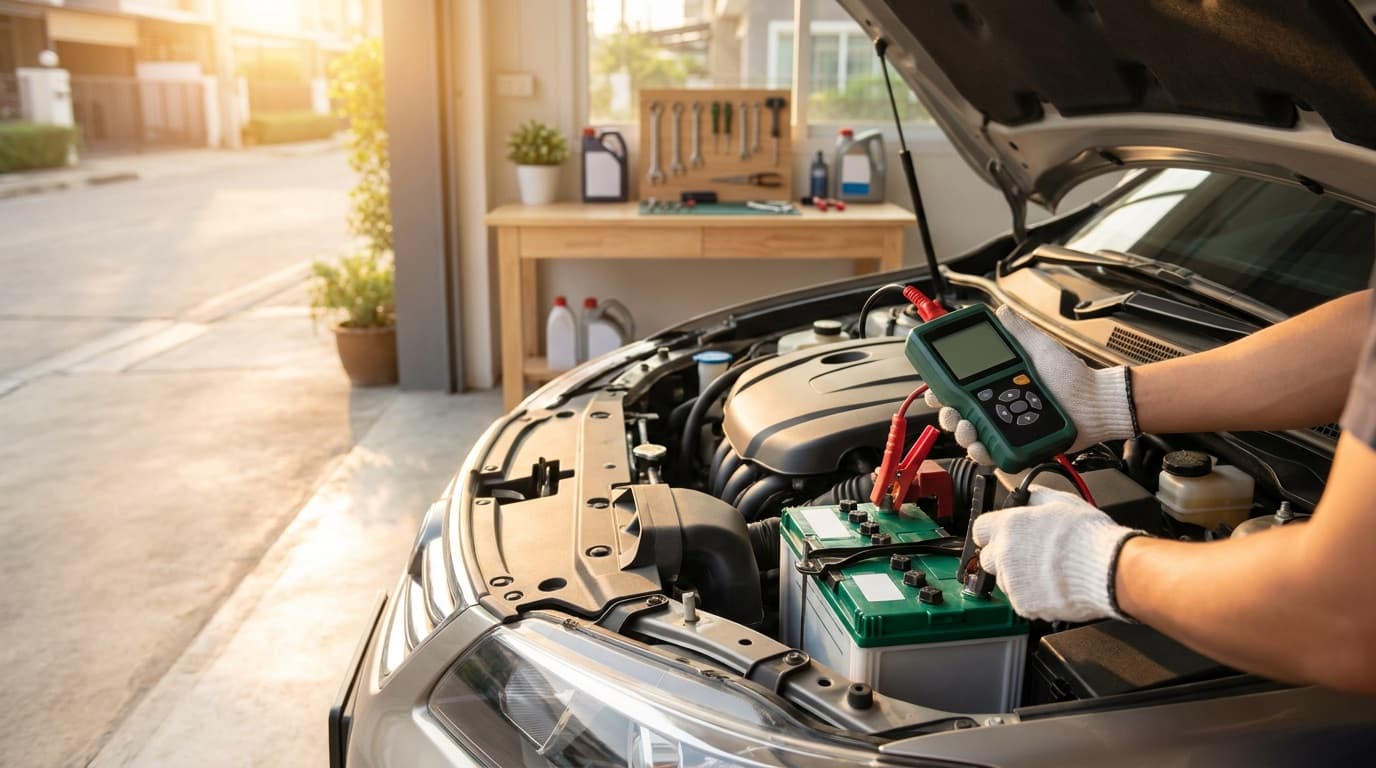
Short answer first. If you turn the key and get rapid clicking or slow, laboured cranking while the headlights and dashboard still light up, the most common culprit is a weak or dead battery. But if the battery warning light comes on while you're driving along normally, that points at the charging system, the alternator. This article separates the two sets of symptoms clearly, starting with checks that need no tools at all.
Symptoms that point to the battery
- You turn the key and hear a click or rapid clicking, but the engine doesn't turn, even though the interior lights work
- Starting gets gradually harder, with slower, more laboured cranking, especially in the morning
- The headlights dim noticeably with the engine off or while cranking
- The car sat parked for days and now won't start, but a jump start gets it going and it runs fine
- The battery is past two years old, which in Thailand's heat means it is entering its final stretch
Symptoms that point to the alternator
- The battery warning light comes on while driving: that is a charging-system signal, not the battery itself
- A jump start works, but the car dies again shortly after, because the alternator isn't feeding charge back
- Headlights that dim and brighten with engine revs, or several electrical systems acting up at once
- A recently replaced battery that keeps going flat again: suspect the charging system before blaming the new battery
Telling them apart with a jump start and a voltage check
A jump start is the best no-tools test there is. If the car starts and keeps running, the problem is mostly the battery. If it starts and then dies again soon after, suspect the alternator. With a voltmeter, a healthy battery reads around 12.6 volts with the engine off, and should rise to roughly 13 to 14.5 volts once the engine is running. If the reading doesn't rise at all with the engine on, the alternator isn't charging. No meter? No need to buy one: any battery shop, ours included, can test both the battery and the charging system in minutes.
Why the battery is usually the culprit in Thailand
Heat accelerates battery wear, which is why batteries here average only around 2 to 3 years, clearly shorter than in cooler countries. Alternators, by contrast, tend to last much longer. So when a car won't start, if the battery is past two years old and the symptoms match the battery column, starting the diagnosis there is the sensible move, and you work toward the charging system only if the symptoms persist.
The checks point to the battery. Now what?
Don't risk driving a car that barely starts to a shop. Use our mobile battery replacement service in Korat: tell us the make, model, year, and where the car is, we confirm the right battery and the total price by phone before any work, and the technician comes to you and fits it with a basic electrical check included. If the on-site check suggests the alternator rather than the battery, we'll say so honestly, and the shop stocks alternator parts too, so just give us a call.
A car that won't start always seems to pick the most hurried morning of the week. Knowing how to read the symptoms means that when it happens, you fix the right thing, get moving faster, and don't pay to replace a part that was never broken.